Types of Consciousness
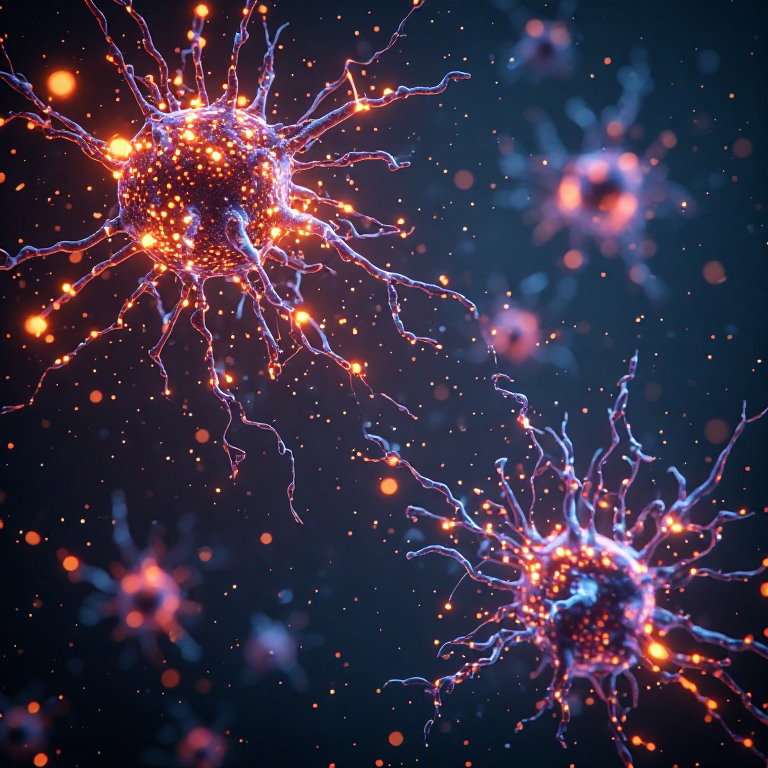
Consciousness, the subjective experience of "what it feels like" to exist, remains one of the deepest mysteries in philosophy. When asking about the causation of consciousness in its metaphysical sense, we are step-taking beyond biology and neuroscience to examine the underlying nature of reality itself.
To clarify the term: metaphysics is the branch of philosophy that studies fundamental reality. While physics asks how matter behaves (governed by forces, particles, and energy), metaphysics asks what reality actually consists of at its root foundation. Physical causation explains how brain signals trigger movements; metaphysical causation asks why physical processes give rise to subjective awareness at all, or whether awareness is a fundamental building block of the cosmos.
Philosophy generally approaches the causation of consciousness through three main metaphysical lenses:
Physicalism (Materialism): Consciousness is a byproduct (epiphenomenon) of physical matter. In this view, sufficiently complex interactions of physical elements (neurons, electrical impulses) cause subjective experience to emerge.
Dualism: Matter and mind are two fundamentally distinct substances. Consciousness is not caused by physical matter, but interacts alongside it (as proposed by René Descartes).
Panpsychism / Idealism: Mind is not created by matter; rather, mind is a fundamental, intrinsic property of the physical universe, or physical matter is itself an expression of consciousness.
Under metaphysical frameworks like panpsychism and integrated information theory (IIT), consciousness is not an "all-or-nothing" light switch. Instead, it is a continuous spectrum of subjective experience scaled by integration, structure, and complexity.
Humans: Reflective / High IntegrationMeta-Consciousness: Includes self-awareness, temporal projection (past/future thinking), abstract reasoning, symbolic language, and complex emotional depth (qualia).
Animals: Perceptual / Moderate IntegrationSentient Experience: Rich sensory perception, primary emotions (fear, desire, affection), pain/pleasure processing, and subjective orientation within an environment without necessarily having abstract self-concepts.
Hearts / OrgansAutonomous / Sub-Systemic Organismic Coordination: A heart does not possess a unified "ego," but under panpsychist or biological-systems views, its living cells maintain localized information exchange, responding to electrical signals and biochemical environments.
Trees & Plants Decoupled / Slow BiologicalPlant Sentience: Slow, network-based awareness. Trees lack a centralized brain, but communicate via chemical signals and fungal networks (the "Wood Wide Web"), responding dynamically to stress, light, and threats.
Microscopic / Unintegrated Proto-Consciousness: A rock lacks a unified mind because its atoms are bound by simple physical cohesion rather than information processing networks. Panpsychists hold that its fundamental particles possess micro-experiences, but the rock itself has no collective "I."
The primary difference between these entities lies in complexity of integration and self-reflection:
Unified vs. Fragmented: Humans and higher animals have centralized nervous systems that unify billions of micro-inputs into a single, cohesive subjective experience ("I see, hear, and feel this all at once"). In contrast, a tree or a heart processes localized inputs without a single centralized "observer."
Self-Awareness vs. Direct Perception: Humans possess meta-awareness, we know that we know. An animal experiences hunger directly, whereas a human reflects on the concept of hunger and plans around it conceptually.
Living Agency vs. Inert Matter: Living organisms (humans, animals, plants, hearts) actively process information to maintain homeostatic balance against entropy. Inanimate objects like rocks do not process information dynamically, meaning any metaphysical "experience" at that level remains purely elementary and uncombined.
Trees communicate and share resources beneath the forest floor through vast underground fungal pathways known as mycorrhizal networks (often dubbed the "Wood Wide Web").
This interaction is a symbiotic partnership between plant roots and mycorrhizal fungi. Because microscopic fungal threads (hyphae) are far thinner and more extensive than tree roots, they act as an biological information superhighway, allowing trees to sense and respond to environmental changes across an entire forest ecosystem
Nutrient & Water Trade: Fungi lack chlorophyll and cannot produce their own food via photosynthesis. In exchange for carbon and photosynthesized sugars provided by the trees, the fungal hyphae gather water, nitrogen, phosphorus, and trace minerals from deep within the soil to feed back to the trees' roots.
Early Warning Systems: When a tree comes under attack by pests (such as aphids or beetles) or pathogens, it releases biochemical warning signals,such as defense-related enzymes or volatile organic compounds, into the fungal network. Neighboring trees receive these signals through their shared connections and proactively ramp up their own chemical defenses before the pests arrive.
Resource Sharing & "Mother Trees": Older, larger trees with extensive canopy exposure (often called "Hub" or "Mother" trees) pass excess carbon and nutrients to younger seedlings growing in the shaded understory. This increases seedling survival rates despite limited sunlight.
Seasonal Reciprocity: Research demonstrates that different tree species continuously exchange resources based on seasonal need. For instance, evergreen conifers transfer carbon to deciduous broadleaf trees during winter when broadleaf species lack leaves, and the exchange reverses during the summer months.
While this system functions without a central nervous system or conscious intent, it demonstrates a decentralized form of environmental responsiveness where the forest operates as a unified, living organism rather than a collection of isolated individuals..
Thinking of individual organs as having their own mini-consciousness changes how we understand the body. Biologically, organs contain semi-autonomous neural networks that process information locally. Metaphysically, this raises a fascinating question: Is your overarching human consciousness actually a federation of smaller, specialized sub-consciousnesses?
Several major organs possess dedicated nervous systems that behave like independent processing centers rather than simple mechanical parts:
The Gut (Enteric Nervous System): Often called the "second brain," the gastrointestinal tract contains over 500 million neurons, more than the spinal cord. It operates autonomously to regulate digestion, senses chemical environments, and produces over 90% of the body's serotonin. It sends constant signals up the vagus nerve, directly influencing your mood and decision-making long before your conscious brain rationalizes a "gut feeling."
The Heart (Intrinsic Cardiac Nervous System): The heart contains roughly 40,000 sensory neurites forming its own complex network (the "heart brain"). It can learn, remember, and make functional decisions independent of the central nervous system, adjusting heart rate patterns based on hormonal and pressure feedback.
The Immune System (Diffused Sensing Network): While not a single organ, the immune system functions as a mobile sensory brain. White blood cells constantly evaluate, remember, and adapt to micro-environments, making autonomous "decisions" about friend versus foe without conscious input from the head.
If consciousness is viewed through Panpsychism or Integrated Information Theory (IIT), every system with integrated information processing has a degree of subjective inner experience
Under this framework, your organs might possess a form of somatic consciousness—a primitive experience of pressure, chemical balance, and localized survival, completely detached from language or vision.
The head brain does not create consciousness out of nothing; instead, it acts as a master integrator. It binds the micro-experiences of your organ systems into a single, seamless narrative that you experience as "myself." When that integration breaks down, such as in deep trauma or severe neurological disassociation, the underlying, independent voices of the body's sub-systems often re-emerge.
Ultimately, whether we examine the subterranean networks of a forest, the semi-autonomous neural centers of our own organs, or the reflective depth of human thought, consciousness emerges not as an isolated anomaly of the brain, but as an fundamental thread woven through reality itself. The difference between a rock, a tree, a heart, and a human mind is not the presence of a magical spark, but the degree to which information, structure, and experience are integrated into a unified whole, revealing a universe that is deeply connected, continuous, and alive at every scale.