Neuro Plasticity
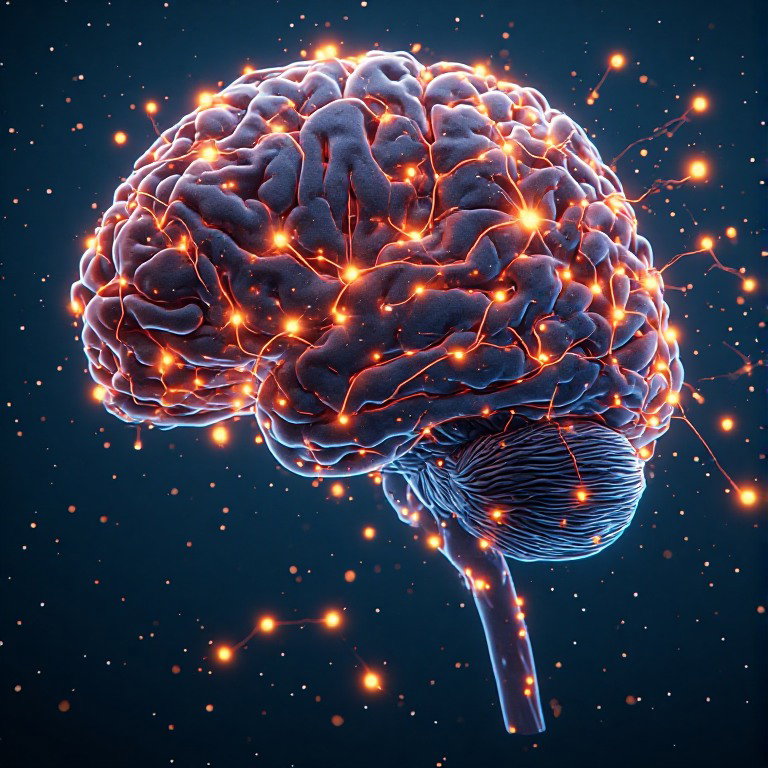
Neuroplasticity, or neural plasticity, is the central nervous system's capacity to structurally and functionally reorganize its network architecture in response to internal or external stimuli, learning, experience, or injury. Historically, the adult brain was viewed as a static, hardwired organ following developmental maturation; modern neuroscience demonstrates that the brain maintains a dynamic equilibrium, constantly altering synaptic efficiency, physical dendritic structures, and functional pathways throughout an individual's lifetime.
At the microscopic level, functional plasticity primary relies on activity-dependent changes in synaptic efficacy. This phenomenon follows the principle often summarized as Hebbian theory: "neurons that fire together, wire together." The core biochemical mechanisms of functional plasticity are Long-Term Potentiation (LTP) and Long-Term Depression (LTD):
Long-Term Potentiation (LTP): When a presynaptic neuron repeatedly stimulates a postsynaptic neuron at high frequency, glutamate is released into the synaptic cleft. Glutamate binds to AMPA receptors, depolarizing the postsynaptic membrane. This displacement releases a magnesium ion block from nearby NMDA receptors, allowing calcium ions to flood into the postsynaptic cell. The influx of calcium triggers intracellular signaling cascades (via enzymes like CaMKII and PKC) that insert additional AMPA receptors into the postsynaptic membrane, strengthening the synapse's signal transmission for hours or weeks.
Long-Term Depression (LTD): Conversely, low-frequency, persistent firing or asynchronous activation leads to a smaller, sustained influx of calcium ions. This lower concentration activates protein phosphatases (such as calcineurin), which internalize AMPA receptors from the postsynaptic membrane, effectively weakening the synaptic signal and preventing network saturation.
While functional plasticity modifies the strength of existing connections, structural plasticity alters the physical connectivity of the brain:
Synaptogenesis and Dendritic Spines: Learning new motor skills or cognitive tasks drives the rapid growth of new dendritic spines, tiny membranous protrusions on the postsynaptic neuron that receive inputs. Repeated use stabilizes these spines, expanding the physical junction. Unused connections undergo synaptic pruning, where microglia and astrocytes engulf and degrade underutilized synaptic structures.
Axonal Remodeling and Myelination: Axons adapt by sprouting new terminal branches to reach different neural targets. Furthermore, oligodendrocytes adjust the thickness of the myelin sheath surrounding heavily traveled axons. Increased myelination speeds up action potential propagation along high-traffic pathways.
Adult Neurogenesis: Contrary to earlier paradigms, neural stem cells in specific neurogenic niches, primarily the subgranular zone (SGZ) of the dentate gyrus in the hippocampus and the subventricular zone (SVZ), generate new functional neurons throughout adulthood, contributing to learning and spatial memory formation.
On a macro scale, neuroplasticity enables cross-modal remapping and functional compensation, particularly following cortical injury such as a stroke. When primary brain regions are damaged, surviving adjacent tissue (perilesional areas) or contralateral homologous regions can take over lost functions through unmasking, activating pre-existing, dormant neural circuits that were previously inhibited. Over time, targeted rehabilitation and intensive behavioral training guide these recruitments, physically rewiring task execution into alternative cortical areas.
Neuroplasticity undergoes a fundamental shift across the human lifespan: early life is dominated by hyper-plastic, experience-expectant structural remodeling, which gradually stabilizes in adulthood into targeted, experience-dependent functional adaptation, before declining in baseline efficiency during late aging.
During developmental critical and sensitive periods, the brain operates in a hyper-plastic state governed by experience-expectant plasticity. Early in life, genetic programs drive an exuberant overproduction of synapses, a process known as synaptogenesis, creating a surplus of neural connections. As sensory experience floods the organism, activity-dependent mechanisms, mediated primarily by NMDA receptor subunit compositions rich in NR2B subunits (which allow longer calcium decay times and easier Long-Term Potentiation), rapidly validate or eliminate these connections. Inhibitory neurotransmission, specifically GABAergic signaling from parvalbumin-expressing interneurons, acts as the molecular trigger that opens these plastic windows. If expected environmental inputs (such as patterned light for the visual cortex or phonemic contrast for language centers) are missing during a critical period, the corresponding circuits fail to consolidate, leading to permanent functional deficits because the underlying structural templates are aggressively pruned away by microglia.
As adolescence transitions into young adulthood, the central nervous system undergoes a profound paradigm shift: it transitions from raw structural expansion to network optimization and stabilization. High-volume synaptic pruning accelerates across the prefrontal cortex, systematically stripping away underutilized dendritic spines while stabilizing high-traffic circuits through increased myelination by oligodendrocytes. At the molecular level, critical periods are systematically closed by the formation of perineuronal nets (PNNs), specialized extracellular matrix structures that wrap around parvalbumin interneurons and soma-dendritic membranes. These physical meshworks act as structural brakes, anchoring synaptic receptors in place, restricting further dendritic spine motility, and preventing established neural maps from being accidentally overwritten or degraded by routine daily experience.
In the fully mature adult brain, plasticity becomes strictly experience-dependent and regionally targeted. Rather than reshaping entire cortical maps effortlessly, adult plasticity relies on focused attention, behavioral relevance, and neuromodulatory gating (via acetylcholine, dopamine, and norepinephrine) to temporarily destabilize localized PNNs and initiate structural remodeling. LTP in the adult brain shifts toward NMDA receptors dominant in NR2A subunits, which mandate higher activation thresholds for synaptic modification. While overall dendritic spine turnover slows down significantly to safeguard consolidated memories and procedural skills, high-intensity learning, novel cognitive challenges, or physical training can still induce local spine growth, axonal sprouting, and subtle re-tuning of synaptic weights across microcircuits.
During late adulthood and healthy aging, baseline neuroplastic efficiency naturally declines due to reduced expression of brain-derived neurotrophic factor (BDNF), vascular aging, persistent low-grade neuroinflammation, and diminished adult neurogenesis in the subgranular zone of the dentate gyrus. However, the aging brain adapts through compensatory neuroplasticity. When local microcircuits lose synaptic density or speed, functional connectivity reorganizes at the macro-network level. As described by the HAROLD (Hemispheric Asymmetry Reduction in Older Adults) and PASA (Posterior-Anterior Shift in Aging) models, the aging brain dynamically recruits additional cortical regions, such as engaging bilateral hemisphere circuits or shifting reliance from occipital processing to prefrontal executive control, to maintain cognitive performance, demonstrating that plasticity remains an active lifelong mechanism for maintaining functional homeostasis.