Human Suffering / Why would a Good God ...?
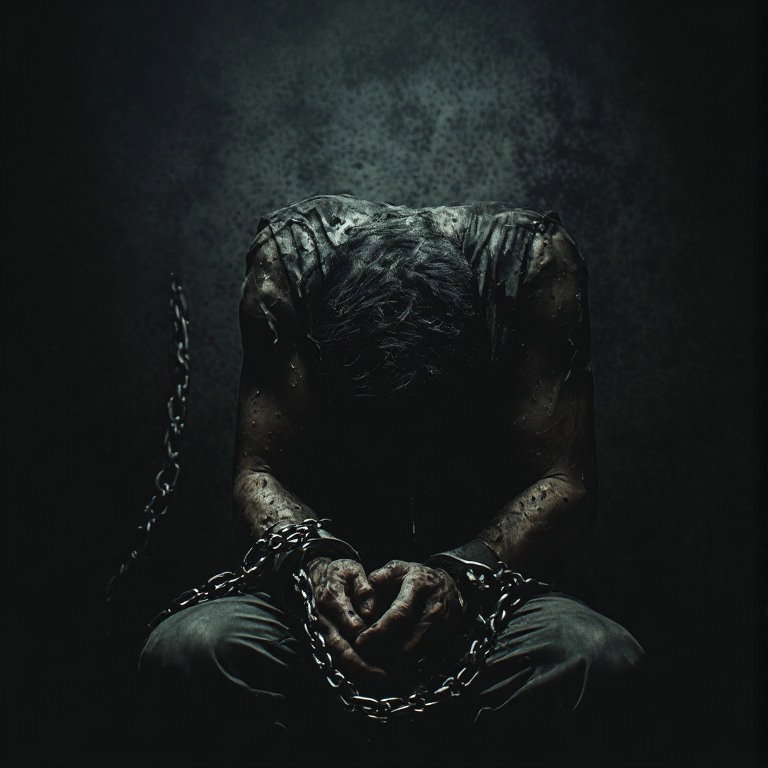
The Architecture of Absolute Sovereignty: A Theological Defense of Unified Monotheism
The human attempt to reconcile the existence of an all-powerful, all-loving deity with the reality of widespread suffering is perhaps the most enduring dilemma in the history of religious philosophy. Known classically as the problem of evil, or theodicy, this challenge has driven various traditions to construct complex mythologies. Some rely on cosmic dualism, imagining a universe locked in a perpetual war between equal forces of light and darkness.
However, a highly rigorous theological framework exists that rejects this dualism entirely. By asserting that God is absolutely sovereign, that His perfect justice is maintained through the redemptive utility of suffering, and that evil possesses no independent cosmic substance, this worldview creates a unified, monotheistic model of reality. Within this framework, history is not a chaotic battlefield, but a deliberately orchestrated crucible for human redemption.
The Illusion of Cosmic Dualism and Absolute Divine Authority
To understand this theological model, one must first dismantle the popular narrative of a spiritual war fought between evenly matched adversaries. In many cultural imaginations, God and Satan are depicted as opposing generals vying for control of human souls and the cosmos. This framework explicitly rejects that premise as a logical impossibility under true monotheism. If a deity shares power, boundaries, or even a contested battlefield with a rival supernatural evil, that deity is by definition limited and therefore not truly supreme.
Instead, this perspective establishes absolute divine sovereignty. The universe operates under a single, unchallenged jurisdiction. If a spiritual adversary exists within this system, he does not function as an autonomous rebel king, but rather as an entity on a tight leash, permitted to act only within boundaries explicitly prescribed by the Creator.
Consequently, there are no rogue elements in history, no cosmic accidents, and no territories outside of divine governance. By eliminating a supernatural rival, the framework ensures that everything that occurs is ultimately filtered through a single, supreme will.
The Mechanics of Suffering and the Preservation of Divine Goodness
If God possesses total monopoly over cosmic power, a profound moral question naturally arises: how can an all-powerful ruler allow suffering while remaining perfectly just and loving? This framework protects the moral character of the divine by categorizing human suffering into two purposeful dimensions: the consequences of human agency and the disciplinary tools of a grander redemptive design.
Much of the misery observed in the world is the direct or indirect result of human choice. When humanity abuses its moral freedom to enact violence, oppression, or deceit, the resulting pain is a manifestation of human sin rather than a flaw in divine goodness. For God to forcibly prevent every bad choice would be to strip humanity of genuine free will, rendering moral responsibility meaningless. Therefore, divine justice is maintained because choices are allowed to have real, tangible consequences.
For suffering that falls outside the realm of human choice such as systemic decay, disease, or natural disasters the framework offers a teleological, or purpose-driven, explanation. Pain is reframed not as a malicious penalty, but as a corrective instrument used by a loving Creator to reshape the human soul. Left to uninterrupted comfort, humanity easily falls into illusions of self-sufficiency, pride, and material permanence.
Suffering acts as a profound disruptor. It humbles human arrogance, exposes the fragile nature of physical existence, and drives individuals to seek a deeper, eternal relationship with the divine. In this light, temporary earthly distress is vindicated by its capacity to yield eternal spiritual restoration.
The Substance of Evil as a Privation of Good
The structural integrity of this theology relies heavily on how it defines the very nature of evil. Rather than viewing evil as an external cosmic substance, a dark energy, or a tangible force floating through the ether, this framework adopts the classical philosophical doctrine of privatio boni, evil as a privation or corruption of good.
Just as darkness does not possess physical properties but is merely the absence of light, and cold is not an independent entity but the absence of thermal energy, evil has no independent metaphysical existence. It is inherently parasitic.
Every moral evil is a good desire or gift that has been twisted out of its proper order through human selfishness. For example, the desire for justice becomes vengeance; the desire for physical pleasure becomes exploitation; the desire for security becomes hoarding and greed.
Similarly, the "natural evil" observed in the friction of a fallen world decay, tragedy, and mortality is not evidence of a flawed creation, but a deliberate, temporary setting. It serves as a constant, structural reminder that the material world is not the ultimate destination, effectively pointing human consciousness toward a transcendent reality.
Conclusion: A Universe of Unified Meaning
Ultimately, this theological framework replaces a chaotic, dualistic universe with an orderly, purposeful one. By anchoring reality in the absolute sovereignty of a single, benevolent God, it removes the terrifying prospect that evil might achieve a final, permanent victory. Because evil is understood as a temporary distortion rather than an immortal cosmic entity, it possesses no permanent foothold in existence.
Furthermore, because every ounce of human suffering is filtered through a perfectly just and loving Creator, pain is stripped of its meaninglessness and transformed into a tool for spiritual maturation. In this beautifully unified cosmos, there are no wasted tragedies. Every shadow is entirely dependent upon, and will ultimately be eclipsed by, the original divine light.